

Structural and Valvular Heart Disease
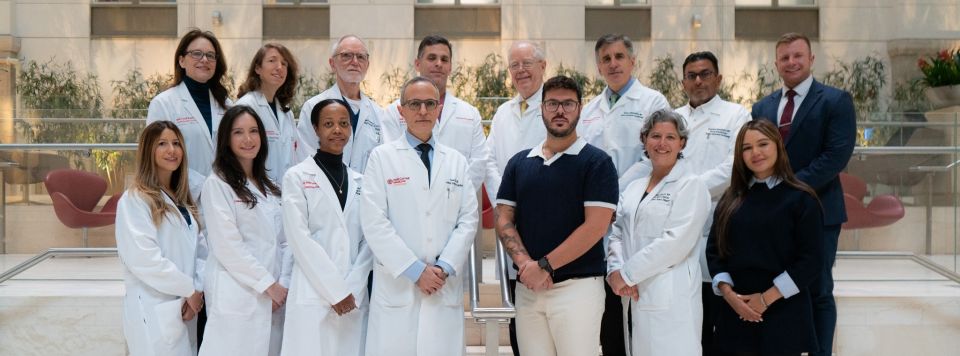
At Weill Cornell Medicine, our dedicated team of specialists provide expert diagnosis and treatment for patients with structural and valvular heart disease. Our team specializes in conditions affecting the mitral, aortic, and tricuspid valves, including complex cases involving multiple valves. Our team also speiclizes in the most advanced treatments for structural heart conditions, including minimally invasive surgical techniques, transcatheter aortic valve replacement (TAVR), transcatheter mitral valve repair and replacement, transcatheter tricuspid valve repair and replacement, and septal ablation.
As a patient at Weill Cornell Medicine, you will receive comprehensive, multidisciplinary care that prioritizes comfort and your best possible health and well-being. Most patients begin their care at the William Acquavella Heart Valve Center, where they receive personalized evaluations and access to the latest innovations in valve therapies, including minimally invasive procedures tailored to their individual needs.
The William Acquavella Heart Valve Center
The William Acquavella Heart Valve Center at New York-Presbyterian/Weill Cornell Medicine is committed to providing outstanding care for patients with all types of heart valve conditions. Our team specializes in diagnosing and treating diseases of the mitral, aortic, and tricuspid valves, using the most advanced and minimally invasive techniques available.
Our center’s collaborative team includes general cardiologists, interventional cardiologists, cardiothoracic surgeons and cardiac imagers who offer the most advanced treatment options, including emerging options. The experts on our team have played a leading role in clinical trials assessing the latest percutaneous valve replacement approaches. Our team is dedicated to developing and evaluating new, less invasive techniques for repairing and replacing damaged aortic, mitral, and tricuspid valves. This involvement gives our team unmatched experience in emerging approaches-both commercially approved and investigational devices exceeding that of many other centers-and ensures our patients have access to cutting-edge treatments and expert, compassionate care.
What is Valvular Heart Disease?
Valvular heart disease occurs when one or more of the heart’s valves fails to open or close properly, disrupting normal blood flow through the heart’s chambers. This forces the heart to work harder to pump blood, which can lead to symptoms such as fatigue, shortness of breath, and chest pain.
If left untreated, valve disease can place significant strain on the heart and may lead to serious complications, including heart failure. Fortunately, many valve conditions can now be treated safely and effectively using minimally invasive procedures — often avoiding the need for open-heart surgery.
What is Structural Heart Disease?
Structural heart disease refers to abnormalities in the heart’s valves, walls, or chambers that affect how well the heart functions. These conditions may be congenital (present at birth) or acquired over time.
Fortunately, many structural conditions can now be treated safely and effectively using minimally invasive procedures, often without the need for open-heart surgery.
Expert Care Across the Board
Our team provides comprehensive care for all forms of structural and valvular heart disease ranging from atrial septal defect (ASD) (a hole in the wall between the heart’s upper chambers) to patent foramen ovale (PFO) (a small opening between the atria that fails to close after birth) to pulmonary valve disease (conditions affects the hearts pulmonary valve). Additional forms of structural and valvular heart disease we treat include:
Aortic Valve Disease
Learn about symptoms, diagnosis, and advanced treatment options for aortic stenosis and regurgitation.
Mitral Valve Disease
Explore our expertise in managing mitral valve regurgitation, and stenosis using both surgical and minimally invasive/transcatheter techniques.
Tricuspid Valve Disease
Discover how we treat tricuspid valve disorders, using both surgical and minimally invasive/transcatheter techniques.
Hypertrophic Cardiomyopathy (HCM)
Learn about our approach to diagnosing and managing hypertrophic cardiomyopathy including advanced imaging and genetic evaluation.
Our Treatment Approach
Diagnosis: At Weill Cornell Medicine, our cardiologists utilize advanced imaging technologies—including 3D echocardiography, cardiac MRI, and CT angiography—to accurately evaluate and diagnose all forms of structural and valvular heart disease. These state-of-the-art tools allow for precise assessment of valve structure and function, guiding personalized treatment plans.
Collaborative Care: Our physicians take a multidisciplinary approach to treating structural and valvular heart disease. Our general cardiologists work closely with interventional cardiologists, electrophysiologists, cardiac surgeons, echocardiographers (or cardiac imagers) and radiologists to ensure each patient receives comprehensive, coordinated care tailored to their unique needs.
Leadership in Research
In addition to delivering exceptional clinical care, our physicians play a leading role in advancing research in structural and valvular heart disease. They have spearheaded and collaborated on multicenter studies examining disease progression, clinical outcomes, and therapeutic approaches for aortic and mitral valve disorders across diverse patient populations. Our team is nationally and internationally recognized for its expertise in mitral and aortic valve disease and has produced numerous peer-reviewed publications and book chapters that continue to influence the field. As a premier academic center, we also participate in national and international trials, providing patients access to innovative, cutting-edge technologies not yet available through commercially approved devices.
Schedule an Appointment
To schedule an appointment to see one of our physicians with expertise in vascular structural and valvular heart disease, please call (646) 962-5500.
To refer a patient or schedule an appointment with a specialist at the William Acquavella Heart Valve Center, please call (646) 697-8258 (NYP-VALVE) or email cornellheartvalve@nyp.org.
If you are an established patient, you may also request an appointment online through Weill Cornell CONNECT. We make every effort to respond within 24 hours.
Our dedicated staff is here to help coordinate your care, provide information about our physicians and their areas of expertise, and assist with scheduling your visit and any necessary testing.
Our Physicians
| Faculty | Title | Phone | ||
|---|---|---|---|---|
 |
Richard B. Devereux, M.D. |
Professor of Medicine | 646-962-4733 | Full Profile |
 |
Geoffrey W. Bergman, M.B.,B.S. |
Associate Professor of Medicine | 646-962-5500 | Full Profile |
 |
Shmuel Chen, M.D., Ph.D. |
Assistant Professor of Medicine | 646-962-5500 | Full Profile |
 |
Jennifer K. Jantz, M.D. |
Assistant Professor of Medicine, Director Structural Heart Imaging | 646-962-4733 | Full Profile |
 |
Robert Mark Minutello, M.D. |
Associate Professor of Clinical Medicine, Director, NYPQ Cardiac Catheterization Laboratory and Structural Heart Disease | 646-962-5500 | Full Profile |